What lessons can be learnt from assisting Healthcare Lift Operations over the last 40 years?
In the latest Health Estate Journal (HEJ), our Director & Head of Vertical Transport (VT) team, John Newbold, reflects on his specialist experience with Estates and Capital Project Departments.
So, what factors are at play when it comes to estate management and healthcare lift operations?
To start with, John outlines the revelant legislation, particularly for Healthcare and highlights that LOLER, generally, requires the most active management in healthcare lift operations.
“Changes to SAFed guidance (referenced by LOLER inspectors) have led to many more recommendations for Supplementary Tests on safety equipment. If these are not heeded and carried out ahead of the next inspection, the Competent Person will not examine the lift – effectively removing it from service. Active review of reports and raising the requisite actions need to be scheduled activities.”
John asks however, is HTM 08-02-compliant lift maintenance is possible as the good competent person guidance in HTM 08-02 is “almost never reflected in lift contractors’ standard terms”.
John considers the sensitive issue of passenger entrapment, and how the impact of such an incident in a healthcare lift operations is so critical;
“Becoming trapped in a lift is a distressing experience, but in a healthcare environment can also have life-threatening.”
The severity of this situation is one of the reasons that John advocates independent auditing so that you can get a clear picture of your healthcare lift operation that might not be available otherwise. John explains;
“Our independent maintenance audits are undertaken in detail, and generate an unambiguous quality score. This has proven useful to track performance and – over several cycles, coupled with feedback and reviews – is proven to improve the performance and reliability of the lifts.”
Other factors that John considers include:
- Machine Room-Less Lifts
- Managing lifecycle replacement and failures
- Design Implications
- Escalators in hospitals (spoiler alert; they are not a great idea!)
- Why appointing an Authorised Lift Engineer can save you a lot of headaches.
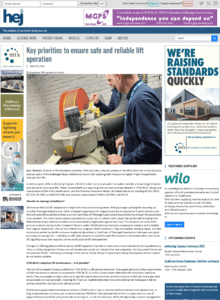
To find out John’s expert opinion, and how you can positively affect your Healtcare Lift Operations, click the image below to read the full article:
If you would like to discuss your Healthcare Lift Operations, contact John today.
John Newbold CEng, MIET who served time with Otis, has spent his entire career in the lift industry, and is now director of SVM Associates’ VT (Vertical Transport) team of nine engineers. He has an HND in Electrical and Electronic Engineering, which supported his eventual position of regional field service technician for Otis. This technical background enables him to take an active role in guiding projects and forming technical policy. He takes an active interest in industry developments, not just in the UK, but across Europe and the US, and is a member of North American Elevator Contractors (NAEC). He advises Houses of Parliament Strategic Estates on lift design and procurement, and acts as Authorising Engineer (Lifts) for a number of NHS Trusts. In addition to overseeing the VT projects, he often acts as expert witness in legal disputes. He sits on the BCO Technical Committee for lifts, and is a Chartered Engineer