2025 will see the end of the Public Switched Telephone Network (PTSN) as we know it. In this edition of SVM Associate’s Talking Point John Newbold, Director at SVMA, explores the change to digital, lift auto-diallers, the impact it will have and what you need to do.
What is the proposed change to Lift Auto-Diallers?
The switch off of the analogue Public Switched Telephone Network (PSTN) has been widely publicised to occur by the end of 2025, replaced by a fully digital network. Beyond that, the 2G network is also to be retired, leaving 4G (and 5G) as the only currently viable mobile networks.
Unless lifts connect only to a permanently manned security office on site, they will rely on the PSTN network for the operation of their emergency alarm systems (auto-diallers). If they do, action is required to ensure continued operation.
What does this mean in practise?
The Lifts Regulations require a permanent two-way communication system permitting contact with a rescue service. Detailed more fully in the harmonised standards BSEN 81-28 and BSEN 81-20, this means that lifts require the system to be operable at all times when the lift is in use. The system must also provide information identifying the lift, a self-check function and allow the rescue service to communicate with the lift (ability to dial in).
Currently there are no lift auto-dialler suppliers offering equipment that can directly connect to a digital (data) network, although we are aware that development in this area is ongoing.
What options are available?
There are currently two options both offering different advantages and disadvantages.
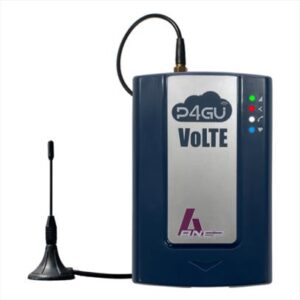 4G Connectivity

This is the suppliers (and lift companies) preferred solution and, of course, presents a commercial opportunity to sell new products. The lift auto-dialler communicates with the rescue service via a 4G mobile signal rather than over the PSTN telephone line. Auto-dialler products with an in-built GSM unit require a SIM (preferably a roaming network) and a consistent mobile signal with sufficient data speed.
It has the benefit of being a self-contained compliant solution with its own battery backed supply that is easy to install.
The disadvantages include:
- Heavy network congestion can affect connection/call integrity
- The aerial needs to be located to ensure sufficient signal strength (particularly with lifts inbound of the building or basement machine rooms)
- A necessity to maintain SIM credit. It is easy to overlook periodic, often annual, SIM credit purchase, especially with multiple lifts across a site, which, unless there is clear liability and process, risks the unavailability of the system should credit expire.
Connection via an ATA
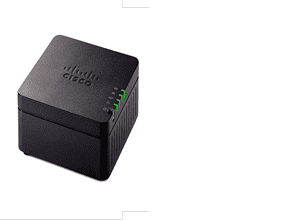 An analogue telephone adaptor (ATA) can be used to interface an existing (analogue) auto-dialler to a digital telephone system. It must be suitable for the digital system protocol and support full DTMF (dual tone multi frequency) signalling for the non-audible data. The advantage of this is a fixed line connection rather like a digital phone and no need to maintain SIM credit.
The disadvantages include:
- System fault, compromising the essential line, which must function 24/7/365.
- Possibility of power failure. Unlike PSTN networks digital lines carry no voltage so all hardware and switching nodes in the network need to be battery backed.
- Clear demarcation of responsibility: Lift companies consider ATAs, and the digital telephone network as a whole, the building owner’s responsibility so are unwilling to get involved with the complexities of interface.
- Ultimate obsolescence. With the phasing out of analogue telecoms equipment ATAs themselves will eventually become an obsolete technology – so becoming more difficult to support.
How can we move forward?
There is no one ‘correct’ solution. The requirement for system operability, at all times ,requires a consistent, robust, high integrity data network either fixed line or mobile network solution. The most appropriate solution for a lift owner/manager’s circumstances will depend upon several factors:
- The location of the lift, both geographically within the mobile signal coverage map and within a building; dictating aerial location. This will need to be established when considering a mobile network solution. If this is the preferred approach a specific commercial arrangement will be required to manage (potentially multiple) SIM credits.
- The data connectivity of the building or estate. Where a wide data network exists, with an active and knowledgeable IT support team in place, constructing and maintaining a high integrity digital phone connection is technically viable. In this case, and particularly with multiple lifts, there will be many legacy analogue auto-diallers installed. Connection via ATAs is cost effective beyond the initial network investment. However, in time the auto-diallers and ATAs will become lifecycle expired, at which point we anticipate the auto-dialler industry will be able to offer a range of equipment able to connect directly to a digital phone network.
What should I be doing?
If you are a building owner or manager responsible for lifts and life maintenance, 2025 is not very far off considering securing budgets, identifying solutions, procuring and implementing the right solutions could take many months.
Your first step should be a thorough risk assessment based on your location, equipment and digital network capabilities .